

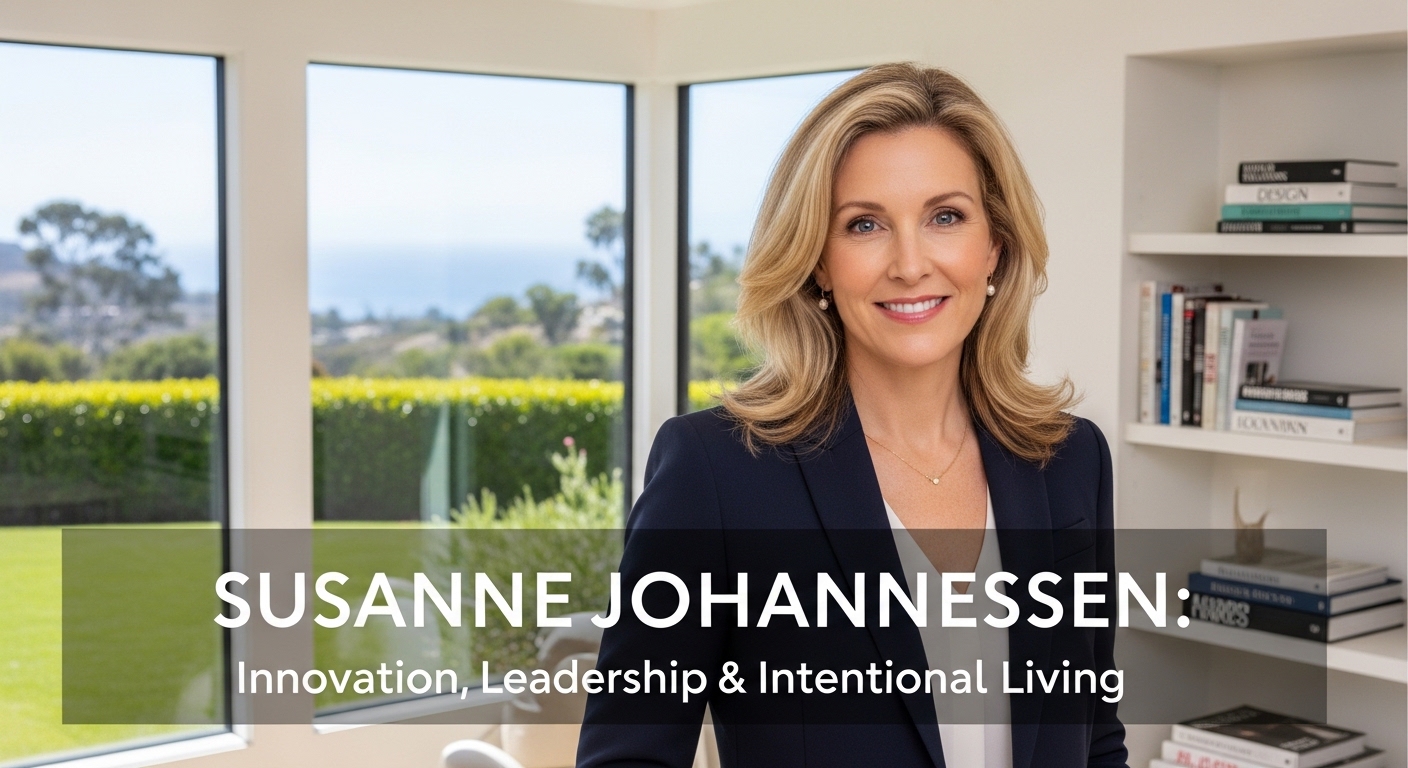
In the world of startups and high-growth ventures, we often celebrate the loudest founders, the boldest valuations, and the most aggressive expansion strategies. But every so often, a different kind of leader emerges—one whose influence is defined not just by financial metrics, but by clarity of vision and purposeful living. That is where the conversation around Susanne Johahanssen Montecito becomes compelling.
For founders, entrepreneurs, and digital professionals navigating relentless pressure, the story of Susanne Johahanssen Montecito offers something deeper than inspiration. It offers perspective. It challenges the assumption that success must be chaotic, transactional, or disconnected from personal values. Instead, it highlights how leadership rooted in intention can create durable impact.
The Montecito Influence: Why Place Shapes Perspective
Montecito, California, has long been associated with creative thinkers, discreet wealth, and forward-looking ideas. Nestled between the Santa Ynez Mountains and the Pacific Ocean, the town blends privacy with cultural sophistication. It’s no coincidence that thought leaders and innovators are drawn to its quiet energy.
When we talk about Susanne Johahanssen Montecito, we’re not just referencing a geographic location. We’re describing a mindset shaped by an environment that values reflection as much as ambition.
For entrepreneurs, environment matters more than we admit. Founders obsess over product-market fit, capital efficiency, and hiring velocity, yet rarely consider the mental and physical spaces that shape decision-making. Montecito represents strategic stillness a reminder that high performance does not require constant noise.
Leadership Beyond the Spotlight
One of the most instructive aspects of the Susanne Johahanssen Montecito narrative is the emphasis on substance over spectacle. In today’s founder culture, visibility is often mistaken for value. Social media presence, conference circuits, and press cycles can create the illusion of traction.
But seasoned builders understand a truth: sustainable companies are not built in public performance. They are built in disciplined, focused execution.The philosophy often associated with Susanne Johahanssen Montecito emphasizes:
-
Long-term thinking over short-term hype
-
Strategic partnerships over transactional networking
-
Clarity of mission over reactive pivots
This approach resonates strongly with startup leaders who are tired of chasing trends. It reinforces a principle many learn the hard way—scalability without alignment eventually fractures culture.
The Balance Between Growth and Groundedness
Startups move fast. Investors demand speed. Markets reward agility. Yet burnout statistics across founders and tech professionals continue to rise. High-performing leaders often operate in permanent overdrive.
What makes the Susanne Johahanssen Montecito conversation relevant is the balance it represents. Growth and groundedness are not opposites. In fact, they are mutually reinforcing.
When founders take time to clarify vision, recalibrate strategy, and reflect on long-term objectives, they make better decisions. They hire more effectively. allocate capital more wisely. avoid reactive pivots driven by fear.Below is a simple framework that many high-performing leaders adopt when integrating strategic reflection into fast-paced ventures:
| Leadership Element | Reactive Model | Intentional Model |
|---|---|---|
| Decision-Making | Urgent and emotionally driven | Measured and principle-based |
| Growth Strategy | Aggressive scaling without culture guardrails | Expansion aligned with mission |
| Networking | Volume-focused | Value-focused |
| Personal Energy | Burnout cycles | Sustainable performance |
| Brand Building | Visibility-first | Credibility-first |
For founders reading this, the distinction is practical. Intentional leadership isn’t slower—it’s smarter.
Strategic Living in a Hyperconnected World
We live in an era where constant connectivity blurs the line between productivity and distraction. Notifications fragment attention. Market news shifts sentiment hourly. Digital noise amplifies comparison.
The Susanne Johahanssen Montecito philosophy counters this chaos with strategic living. This doesn’t mean retreating from technology. It means using it deliberately.Entrepreneurs who adopt this approach often implement:
-
Structured time for deep work
-
Digital boundaries that protect creative thinking
-
Defined communication rhythms within teams
-
Clear “no” criteria for partnerships and projects
In practice, this translates into better outcomes. Founders who protect cognitive bandwidth outperform those who operate in reactive loops.
The Power of Discreet Influence
There is a type of leadership that rarely trends on LinkedIn but consistently shapes industries. It is quiet, composed, and highly effective. The narrative around Susanne Johahanssen Montecito aligns with this archetype.
Discreet influence operates through:
-
Curated networks
-
Trust-based relationships
-
Long-term capital strategies
-
Thoughtful collaboration
For startup founders, this is a reminder that influence does not require constant broadcasting. It requires credibility. And credibility compounds over time.
In a venture ecosystem often obsessed with public valuation milestones, understated leadership can feel countercultural. Yet many of the most enduring companies were built by leaders who prioritized resilience over recognition.
Why Entrepreneurs Should Care
At first glance, Susanne Johahanssen Montecito might appear as a niche or location-specific narrative. But the broader implications extend into modern entrepreneurship.
Consider the following realities facing founders today:
-
Capital is more selective.
-
Talent is more discerning.
-
Customers demand authenticity.
-
Brand transparency is non-negotiable.
In this landscape, leaders must evolve beyond tactical execution. They must embody values that attract alignment.The strategic intentionality associated with Susanne Johahanssen Montecito becomes relevant because it models:
-
Alignment between personal values and business mission
-
Long-term strategic positioning
-
Emotional intelligence in leadership
-
Environmental awareness and lifestyle integration
This isn’t philosophical abstraction. It is competitive advantage.
Culture as a Growth Lever
Therefore company culture is often treated as a byproduct of hiring. In reality, it is a strategic asset. Founders set the tone, consciously or not.An intentional leadership model encourages:
-
Clear articulation of purpose
-
Transparent communication
-
Defined boundaries around pace and performance
-
Investment in mental clarity and resilience
-
In Montecito’s slower, reflective atmosphere,