

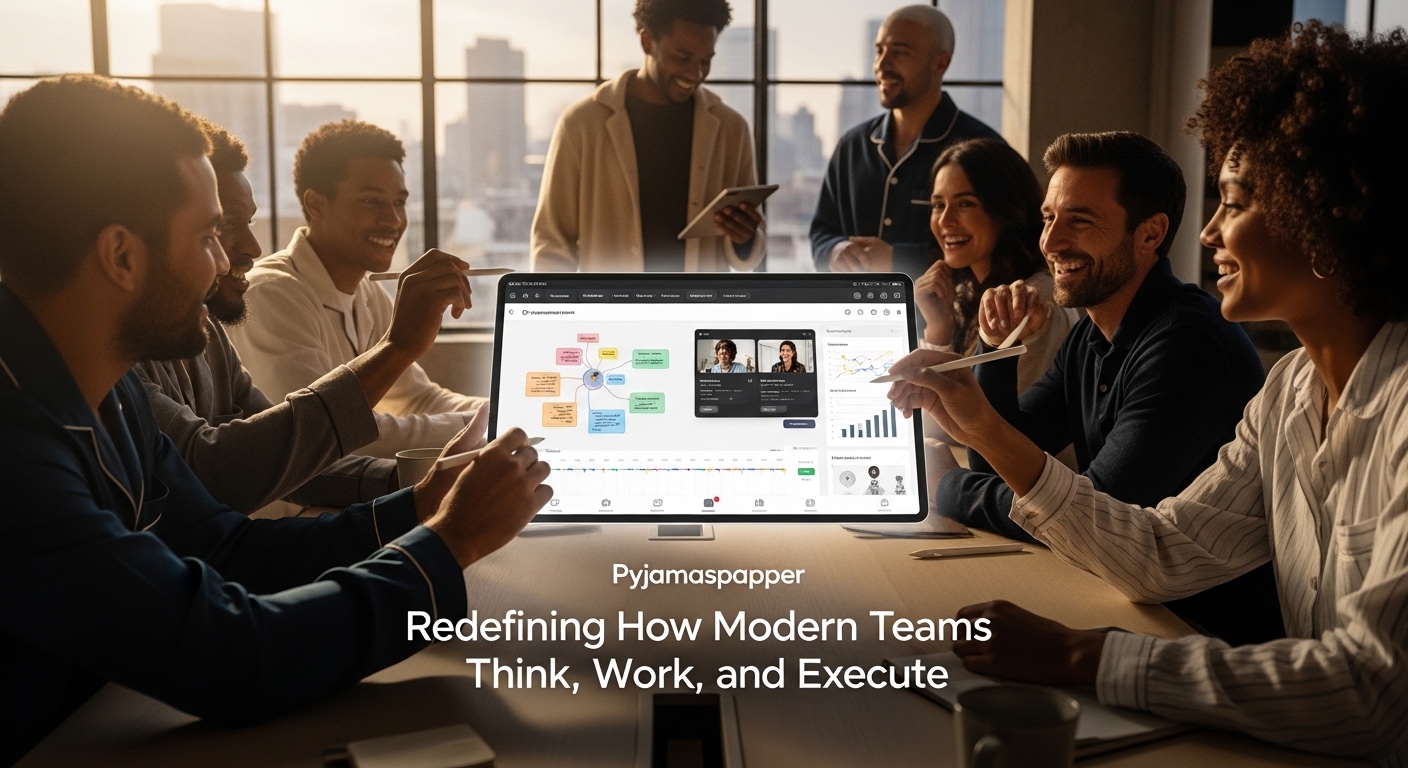
In an era where speed often masquerades as progress and busyness is confused with productivity, pyjamaspapper has emerged as a quiet but powerful countercurrent. It is not another buzzword designed to decorate slide decks or inflate LinkedIn posts. Instead, pyjamaspapper represents a modern way of thinking about work—one that blends clarity, intentional execution, and human-centered design into a system that actually holds up under real-world pressure. For startup founders, entrepreneurs, and tech professionals navigating volatile markets and distributed teams, pyjamaspapper offers something rare: a practical framework that respects both ambition and reality.
At its core, pyjamaspapper is about making meaningful progress without burning people out or drowning organizations in complexity. It acknowledges that modern work no longer happens in neat offices or fixed hours, yet it still demands structure, accountability, and results. This balance is what makes pyjamaspapper especially relevant today.
The Origin and Meaning Behind Pyjamaspapper
The term pyjamaspapper may sound playful, but its philosophy is anything but casual. It reflects the evolution of work culture itself—where laptops replace cubicles, asynchronous collaboration replaces rigid schedules, and outcomes matter more than optics. Pyjamaspapper symbolizes the idea that serious, high-impact work can happen outside traditional constraints, provided there is a strong underlying system guiding it.
Unlike rigid methodologies that assume ideal conditions, pyjamaspapper is built for imperfection. It assumes interruptions will happen, priorities will shift, and people will bring their full human complexity to work. Rather than resisting this reality, it incorporates it into how teams plan, decide, and execute.
Why Pyjamaspapper Resonates in Today’s Business Landscape
The modern business environment is defined by uncertainty. Startups pivot frequently, product cycles are shorter, and competition can emerge from anywhere. In this context, frameworks that rely on heavy documentation or strict linear planning often collapse under their own weight. Pyjamaspapper thrives precisely because it is adaptive.
founders, pyjamaspapper provides a way to scale execution without suffocating creativity. entrepreneurs, it offers clarity when resources are thin and stakes are high. For tech professionals, it creates alignment across teams without micromanagement. Its strength lies in helping organizations focus on what truly moves the needle, rather than what simply looks productive.
Pyjamaspapper as an Execution Philosophy, Not a Rulebook
One of the defining characteristics of pyjamaspapper is that it is not prescriptive. It does not dictate exact meeting formats, sprint lengths, or tool stacks. Instead, it provides a philosophy of execution grounded in three principles: intentional work, visible progress, and sustainable pace.
Intentional work means every initiative has a clear reason for existing. Visible progress ensures that teams can see momentum, even when outcomes take time. Sustainable pace acknowledges that long-term success is impossible without protecting energy and focus. Together, these principles create a system that feels flexible yet grounded.
How Pyjamaspapper Changes Decision-Making
Decision fatigue is a hidden tax on growing companies. Pyjamaspapper reduces this burden by creating shared mental models across teams. When priorities are clear and principles are understood, fewer decisions need to be escalated. People know how to act without waiting for permission.
This approach also reframes failure. Instead of viewing missteps as personal shortcomings, pyjamaspapper treats them as feedback loops. Teams adjust quickly, learn openly, and move forward without blame. Over time, this builds trust and accelerates execution.
Pyjamaspapper in Practice: From Strategy to Daily Work
While pyjamaspapper is philosophical in nature, its impact is deeply practical. Teams using this approach often redesign how strategy connects to daily tasks. Long-term goals are broken into meaningful milestones, but without the false precision that often accompanies traditional planning.
Communication becomes more deliberate. Instead of constant status updates, teams focus on signaling progress, risks, and learnings. Meetings become fewer but more purposeful. Documentation shifts from exhaustive records to living references that evolve as work progresses.
The table below illustrates how pyjamaspapper typically reshapes core aspects of work compared to more traditional models.
| Work Dimension | Traditional Approach | Pyjamaspapper Approach |
|---|---|---|
| Planning | Fixed, long-term roadmaps | Adaptive milestones with clear intent |
| Productivity | Hours worked and visible busyness | Outcomes and learning velocity |
| Communication | Frequent updates and meetings | Intentional signals and shared context |
| Failure | Something to avoid or hide | A source of rapid feedback |
| Pace | Cycles of overwork and recovery | Consistent, sustainable momentum |
The Cultural Impact of Pyjamaspapper
Culture is often discussed in abstract terms, but pyjamaspapper makes it tangible. By prioritizing clarity and trust, it naturally fosters a culture of ownership. People feel empowered to make decisions because expectations are explicit, not implied.
This cultural shift is especially powerful in remote or hybrid environments. When teams are not physically co-located, ambiguity can quickly erode morale. It counteracts this by making priorities visible and progress shared, regardless of location or time zone.
Pyjamaspapper and Leadership in Modern Organizations
Leadership under pyjamaspapper looks different from traditional command-and-control models. Leaders act less as overseers and more as context-setters. Their primary responsibility is to ensure that teams understand the “why” behind their work and have the resources to execute effectively.
This does not mean leadership becomes passive. On the contrary, it requires greater discipline. Leaders must resist the urge to intervene unnecessarily and instead focus on removing obstacles, clarifying priorities, and reinforcing principles. Over time, this creates organizations that are both resilient and fast-moving.
Scaling with Pyjamaspapper Without Losing Focus
One of the greatest challenges startups face is maintaining focus as they grow. Processes multiply, communication layers thicken, and execution slows.It offers a way to scale without losing agility by anchoring growth in shared principles rather than rigid procedures.
As new teams form, they inherit a way of thinking rather than a checklist. This makes onboarding faster and alignment stronger. Even as complexity increases, the core philosophy remains intact, allowing organizations to evolve without fragmenting.
Common Misconceptions About Pyjamaspapper
Because it emphasizes flexibility, it is sometimes mistaken for a lack of discipline. In reality, the opposite is true. It demands a high level of clarity and accountability.
Another misconception is that it only works for creative or tech-driven teams.From product development to operations, the framework adapts to context rather than forcing uniformity.
Why Pyjamaspapper Is Gaining Momentum
The growing interest in pyjamaspapper reflects a broader shift in how people think about work. Leaders are actively seeking models that deliver results without sacrificing well-being.
It resonates because it feels honest. It does not promise perfect predictability or effortless success. Instead, it offers a way to navigate complexity with intention, resilience, and respect for human limits.
The Future of Work Through the Lens of Pyjamaspapper
As technology continues to reshape how we work, the need for adaptable execution frameworks will only increase. Automation may handle routine tasks, but judgment, creativity, and collaboration will remain deeply human.
Rather than chasing the next trend, organizations adopting pyjamaspapper invest in a durable mindset. One that can evolve alongside tools, markets, and expectations without losing its core purpose.
Conclusion: Pyjamaspapper as a Sustainable Path Forward
Pyjamaspapper is not a shortcut or a silver bullet. It is a thoughtful response to the realities of modern work. By blending structure with flexibility, and ambition with sustainability, it offers a framework that helps teams execute with clarity and confidence.
For startup founders, entrepreneurs, and tech professionals, pyjamaspapper represents more than a way of working. It is a statement about what kind of organizations we want to build—ones that deliver meaningful impact while honoring the people behind the work. In a world obsessed with speed, pyjamaspapper reminds us that progress, when done right, is both intentional and human.