

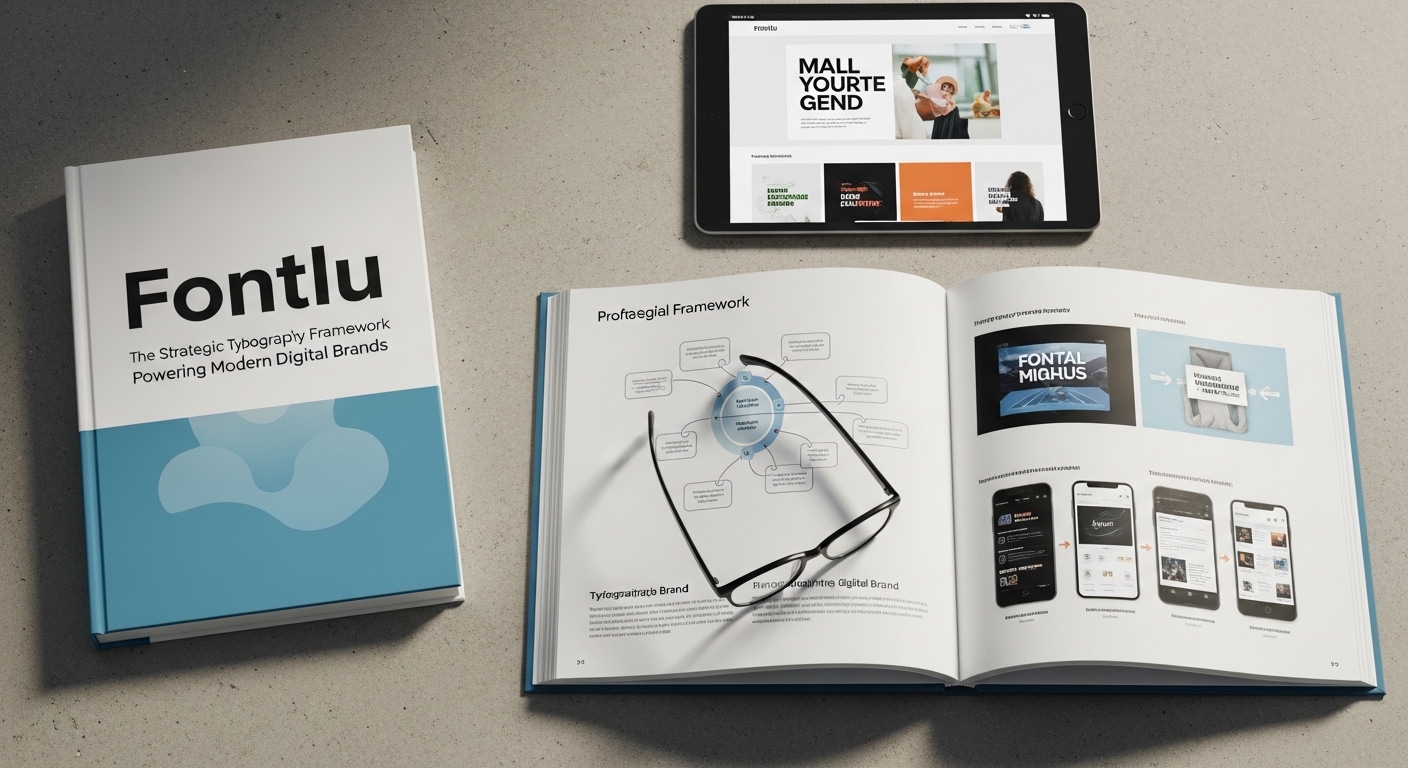
HOWEVERIn a world where attention spans are shrinking and digital competition is relentless, the smallest design decisions can create the biggest business impact. One of those decisions often underestimated is typography. That’s where fontlu enters the conversation. More than just a stylistic choice, fontlu represents a strategic approach to typography that aligns brand psychology, user experience, and digital performance into a cohesive system.
For startup founders, product managers, and tech professionals, fontlu is not about picking a “nice-looking font.” It’s about understanding how type shapes perception, influences trust, drives conversions, and ultimately supports growth. In today’s digital economy, typography is infrastructure. And fontlu is the framework that makes that infrastructure intentional.
Understanding Fontlu in a Business Context
At its core, fontlu is a modern typography methodology that blends design thinking with performance strategy. Instead of viewing fonts as isolated visual elements, fontlu treats them as components of a broader brand architecture.
Consider how typography impacts your first impression. When users land on your website, open your app, or read your pitch deck, they’re subconsciously evaluating credibility in milliseconds. Typography communicates before your content does. A poorly chosen font can signal amateurism. A refined and consistent system signals confidence and clarity.
Fontlu encourages founders and digital leaders to approach typography with the same rigor they apply to product design or marketing funnels. It asks key questions:
Is the type readable across devices?
>>>>>>>>>Does it reflect the brand’s personality?
>>>>>>>Does it scale as the company grows?
These questions are not aesthetic they’re strategic.
The Psychology Behind Fontlu
Typography influences human perception in subtle but measurable ways. Serif fonts often convey tradition and authority. Sans-serif fonts feel modern and clean. Monospaced fonts signal technical precision. Script fonts suggest creativity or personalization.
Fontlu doesn’t rely on guesswork. It aligns font choices with brand positioning. A fintech startup aiming to compete with legacy institutions may choose a hybrid system modern sans-serif for accessibility, paired with subtle serif accents for authority. A SaaS platform targeting developers may lean into minimalistic, highly legible typefaces that mirror clarity in code.When typography and brand positioning are misaligned, friction occurs. Users may not consciously identify the issue, but trust erodes. Fontlu eliminates that disconnect by ensuring visual language reinforces strategic intent.
Why Fontlu Matters for Startups
Startups often operate under intense pressure limited budgets, small teams, and rapid iteration cycles. Typography can seem secondary compared to product-market fit or fundraising. But in reality, it plays a critical role in each of those milestones.Investors assess brand maturity during pitch presentations. Customers evaluate credibility through landing pages. Early adopters judge usability in onboarding flows. Typography sits at the center of all three.
Fontlu provides a repeatable structure. Instead of redesigning typography with every new campaign or feature, startups build a scalable system early. That consistency reduces design debt and ensures brand coherence as the company expands.In fast-scaling environments, inconsistency becomes expensive. Marketing materials diverge from product interfaces. Blog visuals don’t match app dashboards. Sales decks feel disconnected from the website. Fontlu prevents this fragmentation.
The Technical Side of Fontlu
Beyond aesthetics and psychology, fontlu also addresses technical performance. Typography impacts page speed, accessibility, and search visibility.
Custom font files can increase load times if not optimized. Improper hierarchy can confuse screen readers. Inconsistent heading structures can weaken SEO performance. A structured fontlu approach ensures typography is technically sound.
Here’s a simplified breakdown of how fontlu aligns typography with performance goals:
| Typography Factor | Business Impact | Fontlu Approach |
|---|---|---|
| Font File Size | Affects page speed and bounce rate | Use optimized web fonts and limit variants |
| Readability | Impacts engagement and conversions | Prioritize legibility across devices |
| Hierarchy | Supports SEO and content clarity | Establish consistent H1–H6 structure |
| Brand Consistency | Builds trust and recognition | Create a defined typography system |
| Accessibility | Expands user reach and compliance | Ensure contrast ratios and scalable text |
This table highlights a simple truth: typography is measurable. And what’s measurable can be optimized.
Fontlu and User Experience
User experience is often discussed in terms of navigation, layout, and interaction. Typography, however, is the connective tissue of all three. It guides the eye, structures information, and influences cognitive load.
Fontlu emphasizes clarity over decoration. It recognizes that users skim before they read. Proper spacing, line height, and visual hierarchy make scanning effortless. When text feels dense or chaotic, users disengage.Consider a product onboarding sequence. If instructions are cramped or visually inconsistent, friction increases. Even small typographic improvements can reduce drop-off rates. In this sense, fontlu directly contributes to product retention metrics.
Fontlu in Branding and Market Positioning
Strong brands are recognizable without logos. Typography plays a huge role in that recognition. Think about how certain companies have distinct type systems that immediately signal their identity. It encourages businesses to develop their own recognizable typographic signature.For emerging companies, this is especially powerful. Competing against established players requires differentiation. Visual cohesion signals maturity even if the company is young.
A cohesive typography system across website, social media graphics, newsletters, and pitch materials creates psychological reinforcement. Repetition builds familiarity. Familiarity builds trust.Fontlu transforms typography from a decorative afterthought into a brand asset.
Implementing Fontlu in a Growing Organization
Adopting fontlu doesn’t require a massive rebrand. It begins with intentional decisions. Start with a typography audit. Identify inconsistencies across digital touchpoints. Define primary and secondary fonts. Establish hierarchy rules. Document everything.The documentation step is critical. Without it, teams revert to personal preferences, and consistency dissolves. A clear typography guide aligned with fontlu principles becomes part of the company’s design system.
As the organization grows, this system becomes even more valuable. New designers, developers, and marketers can onboard faster. They don’t reinvent the wheel. They follow the established structure.In high-growth startups, speed is survival. Fontlu supports speed by eliminating ambiguity.
Fontlu and Content Strategy
Content is the backbone of digital visibility. Blog posts, landing pages, whitepapers, and newsletters all rely on typography to deliver impact.Even the most Fontlu thought leadership can fall flat if the reading experience is uncomfortable. Long paragraphs without spacing increase fatigue. Inconsistent headings disrupt flow. Poor contrast makes text harder to read.
Fontlu integrates typography into content strategy. It ensures that storytelling is supported by structure. This is especially relevant for media platforms and digital publications aiming for authority.When content feels easy to read, readers stay longer. Longer engagement signals value to both users and search engines.
The Competitive Advantage of Fontlu
In saturated markets, differentiation is often subtle. Many companies offer similar features. Pricing models converge. Messaging overlaps.Typography becomes part of the emotional differentiator.
It allows companies to communicate identity without saying a word. A bold, confident type system signals innovation. A minimalist approach signals efficiency. A refined, elegant style signals sophistication.These signals influence buyer perception before a single product demo begins.For tech professionals building products in competitive verticals AI, fintech, healthtech visual credibility is essential. it ensures that credibility is designed, not accidental.
The Future of Fontlu in a Multi-Platform World
Digital ecosystems are expanding. Brands now exist across websites, mobile apps, wearable interfaces, and emerging immersive environments. Typography must adapt seamlessly across these contexts.It anticipates this evolution by prioritizing flexibility. Variable fonts, responsive typography, and adaptive scaling are part of its forward-looking approach.As screen sizes diversify and accessibility standards evolve, typography systems must be resilient. Fontlu emphasizes building systems that can evolve without losing identity.
In the coming years, AI-generated design and automated content production will increase. The brands that stand out will be those with strong, human-centered design frameworks. Typography will remain one of the most powerful anchors of authenticity.Fontlu positions organizations to thrive in that future.
Conclusion:
Fontlu is not about chasing design trends. It’s about building strategic clarity through typography. For founders and digital leaders, it offers a structured way to align brand identity, user experience, technical performance, and growth objectives.In an era where trust is fragile and competition is intense, small signals matter. Typography is one of those signals. When executed thoughtfully, it communicates confidence, precision, and purpose.
Startups that adopt fontlu early reduce design chaos, improve user engagement, and strengthen brand recognition. Established companies that refine their typography systems enhance consistency and credibility.Ultimately, fontlu is about intentionality. It transforms fonts from visual decoration into business strategy. And in the digital economy, strategy is what separates noise from influence.