

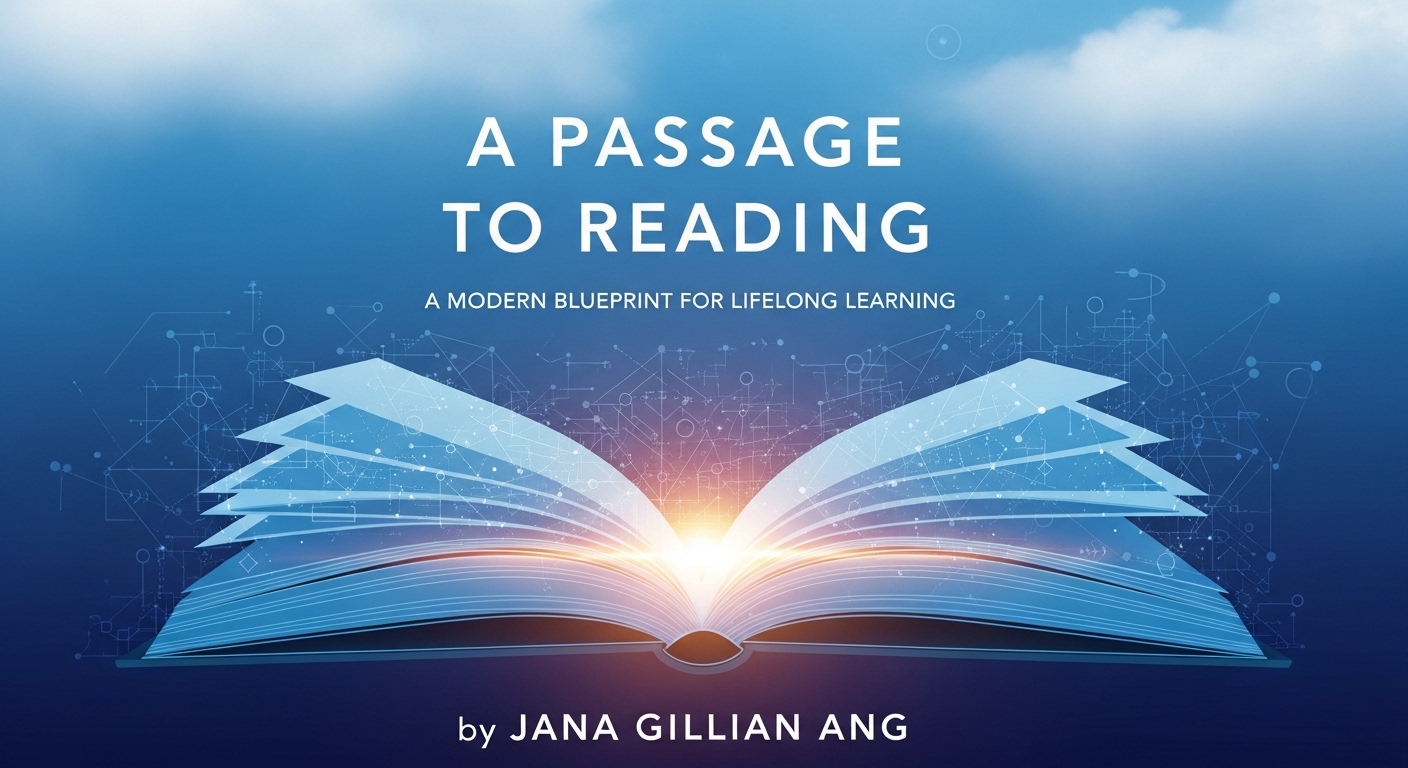
In an era defined by rapid technological shifts and shrinking attention spans, deep reading has become a competitive advantage. Founders who can synthesize information quickly, engineers who can interpret complex documentation, and digital professionals who can connect ideas across disciplines consistently outperform their peers. It is in this context that a passage to reading by Jana Gillian Ang emerges as more than just a literary work it becomes a framework for intellectual growth.
While the title may sound poetic, the message is practical: reading is not passive consumption. It is an active discipline that shapes judgment, creativity, and leadership. For startup founders and tech professionals navigating volatile markets, this perspective could not be more relevant.
Understanding A Passage to Reading by Jana Gillian Ang
At its core, a passage to reading by Jana Gillian Ang explores reading as a transformative process. Rather than treating books as static sources of information, Ang frames reading as an ongoing dialogue between the reader and the text. The work encourages readers to move beyond skimming and toward deliberate engagement questioning, reflecting, and connecting ideas to real-world experiences.
For entrepreneurs, this approach mirrors product development. You do not simply launch a feature and forget it. You test, refine, analyze feedback, and iterate. Reading, Ang suggests, should follow the same cycle.In practical terms, this means annotating insights, challenging assumptions, and revisiting passages when circumstances change. A founder reading about behavioral psychology today may interpret it differently after a year of scaling a team. The reading itself remains the same, but the reader evolves and that evolution unlocks deeper understanding.
Why A Passage to Reading by Jana Gillian Ang Matters in the Digital Economy
Technology has created unprecedented access to information. Yet access alone does not guarantee wisdom. Startup ecosystems are saturated with blog posts, podcasts, white papers, and AI-generated summaries. The paradox is clear: more information, less clarity.Ang’s philosophy cuts through this noise. She emphasizes intentional reading choosing material with purpose and extracting meaning strategically. For digital leaders, this aligns directly with decision-making under uncertainty.
Consider how many critical choices hinge on interpretation: market research reports, investor term sheets, user feedback, regulatory guidelines. The ability to read deeply and critically is not an academic exercise; it is operational leverage.The principles in a passage to reading by Jana Gillian Ang can be applied immediately. When reviewing a competitor’s case study, instead of scanning for quick wins, you examine structural patterns. When studying industry trends, you identify second-order implications. Deep reading trains strategic thinking.
Reading as Strategic Infrastructure
Startup founders often invest heavily in tools—project management software, analytics dashboards, AI integrations. Yet the most underutilized infrastructure is cognitive capacity. Reading builds that infrastructure quietly but powerfully.
Ang positions reading as an intentional habit rather than a sporadic activity. This distinction matters. Just as companies build recurring revenue models, individuals build recurring learning loops. Reading becomes a system.
To illustrate how her ideas translate into professional growth, consider the following framework:
| Reading Approach | Immediate Outcome | Long-Term Impact for Professionals |
|---|---|---|
| Surface skimming | Quick information capture | Shallow understanding, reactive decisions |
| Analytical reading | Structured comprehension | Improved problem-solving |
| Reflective reading | Personal insight and synthesis | Strategic thinking and innovation |
| Iterative re-reading | Deep mastery over time | Thought leadership and intellectual authority |
This table reflects the layered model implied in a passage to reading by Jana Gillian Ang. The progression from skimming to iterative re-reading mirrors how startups evolve from MVP to scalable enterprise.
The Psychology Behind Deep Reading
One of the compelling aspects of a passage to reading by Jana Gillian Ang is its psychological insight. Reading shapes neural pathways. When we slow down and engage critically, we strengthen attention control and analytical reasoning.
For tech professionals juggling Slack notifications and rapid deployment cycles, this is crucial. Cognitive fragmentation reduces strategic depth. Deep reading counteracts that fragmentation by demanding sustained focus.
Ang’s perspective reinforces a truth many leaders intuitively understand: innovation often emerges from cross-disciplinary synthesis. Reading broadly philosophy, economics, behavioral science, literature expands cognitive range. A fintech founder who reads about narrative structure may communicate product vision more persuasively. A developer studying ethics may design more responsible AI systems.
Reading is not separate from execution; it fuels it.
Applying the Lessons to Startup Leadership
Let’s move from theory to application. How does a passage to reading by Jana Gillian Ang translate into measurable leadership growth?
First, it reshapes how founders consume business literature. Instead of racing through titles for credibility, they extract actionable frameworks. They question assumptions embedded in bestselling advice. They compare multiple viewpoints before forming conclusions.
Second, it strengthens communication. Leaders who read deeply write and speak with clarity. They connect ideas logically and anticipate counterarguments. Investors notice this precision.
Third, it enhances resilience. Markets shift. Products fail. Regulations tighten. Leaders who have trained themselves to interpret complex texts are better equipped to interpret complex realities. Reading builds intellectual flexibility.
In many ways, Ang’s work suggests that literacy is not merely about decoding words. It is about decoding systems economic systems, technological systems, human systems.
The Discipline of Slow Thinking
Modern startup culture celebrates speed. Ship fast. Iterate quickly. Fail forward. While speed has advantages, it can also produce shallow thinking. A passage to reading by Jana Gillian Ang introduces a counterbalance: deliberate intellectual pacing.
Slow reading fosters slow thinking, and slow thinking produces durable decisions. Consider major pivots in tech history. Behind each pivot was analysis of data, user behavior, competitive landscape. Leaders who cultivate deep reading habits are more comfortable with complexity. They resist impulsive conclusions.This is not about reading more books. It is about extracting more value from each one.
Building a Reading Culture in Organizations
Ang’s philosophy extends beyond individuals. Startups can institutionalize deep reading practices. Internal reading groups, shared annotation platforms, or quarterly intellectual themes can align teams around thoughtful learning.
When organizations treat reading as strategic, they encourage evidence-based discussion. Meetings shift from opinion-driven debates to insight-driven conversations. Team members reference studies, frameworks, and historical precedents.Over time, this builds cultural capital. A company known for intellectual rigor attracts high-caliber talent. Engineers and strategists want to work where ideas matter.
Navigating Information Overload with Intention
The digital age rewards speed but punishes distraction. News cycles spin rapidly. Trends shift weekly. AI tools summarize content instantly. In this environment, a passage to reading by Jana Gillian Ang offers a grounding principle: intentional consumption.
Intentional reading begins with clear purpose. Why are you reading this article? What decision will it inform? How does it connect to your broader strategy?When readers approach content with these questions, they filter noise effectively. They move from passive scrolling to active analysis. This shift alone can dramatically improve professional clarity.
From Reading to Thought Leadership
For founders and digital professionals who aspire to publish or speak publicly, deep reading is foundational. Original thought rarely emerges in isolation. It emerges from synthesizing diverse perspectives.
Ang’s work implicitly encourages this synthesis. By engaging deeply with texts, readers begin to see patterns across domains. They connect economic theory with user behavior, psychology with product design, storytelling with brand strategy.This integrative thinking distinguishes thought leaders from content creators. The former build frameworks; the latter recycle headlines.
The Enduring Relevance of A Passage to Reading by Jana Gillian Ang
Trends in technology evolve rapidly, but the need for critical thinking remains constant. Artificial intelligence can summarize a report, but it cannot replace human judgment shaped by reflection and context.
The enduring message of a passage to reading by Jana Gillian Ang is simple yet profound: reading is a practice of becoming. Each page reshapes perspective. Each reflection refines discernment.For startup founders navigating funding cycles, for developers architecting scalable systems, and for digital strategists shaping brand narratives, this mindset is invaluable. Deep reading builds intellectual stamina. Intellectual stamina builds durable success.
Conclusion: Reading as a Competitive Edge
In the startup world, advantage often appears in unexpected places. It may not be a new funding round or a cutting-edge AI tool. may be a quiet habit practiced daily the discipline of thoughtful reading.A passage to reading by Jana Gillian Ang reframes reading from a background activity to a strategic asset. invites professionals to slow down, engage deeply, and extract layered meaning from the content they consume. In doing so, it strengthens analytical skills, sharpens communication, and expands creative capacity.
For digital leaders seeking long-term impact, the lesson is clear: invest in your cognitive infrastructure. Read deliberately. Reflect consistently. Revisit ideas over time. In a world racing toward instant answers, those who master deep understanding will lead.