

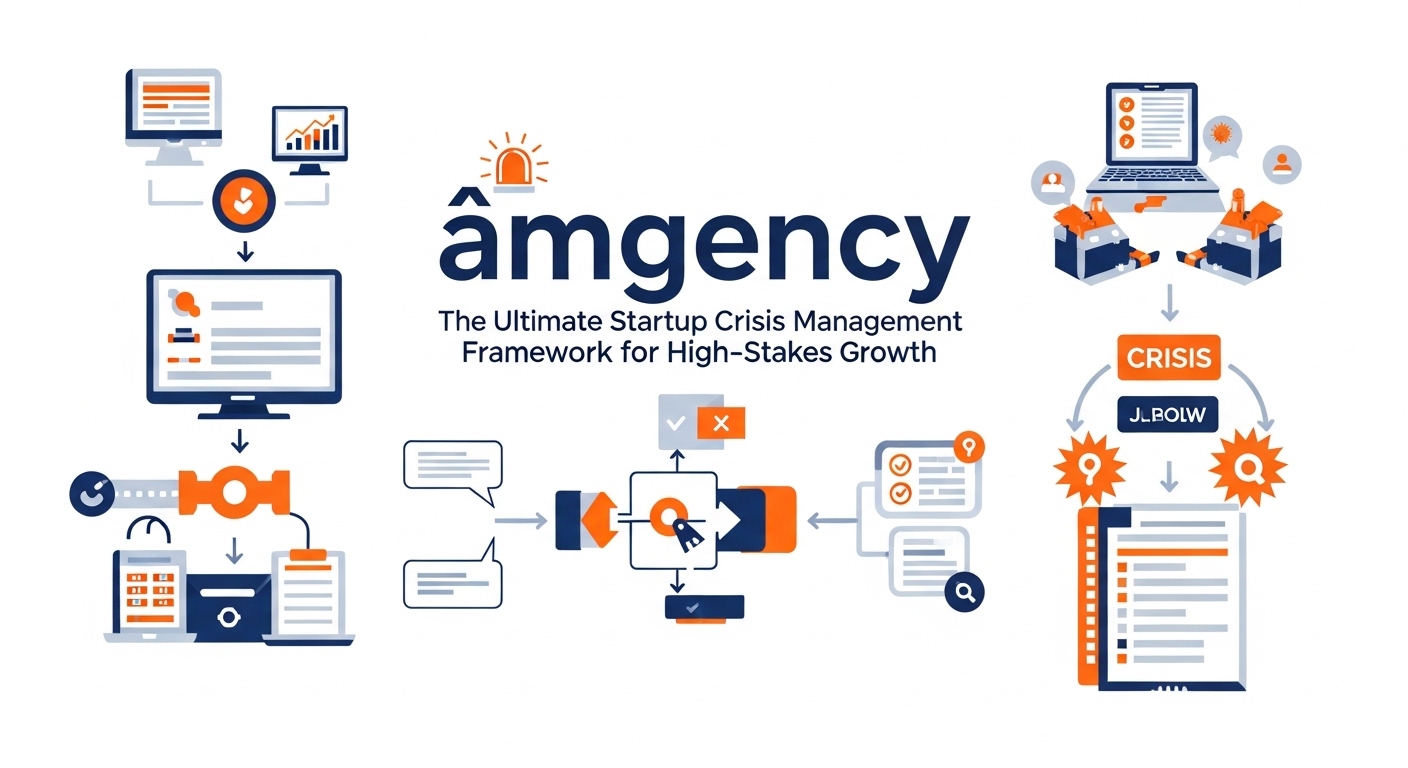
In the life of every startup, there comes a moment when the air changes. Cash flow tightens. A competitor moves faster than expected. A key hire resigns. Investors start asking sharper questions. These moments don’t announce themselves politely they arrive with urgency. That is where ểmgency becomes more than a concept. It becomes a survival framework.
The idea behind ểmgency is simple but powerful: treat critical business inflection points with the structured intensity of an emergency room. In an ER, chaos is constant, but outcomes depend on systems, prioritization, and decisive leadership. Startups operate in a similar environment. The difference between companies that scale and those that stall often comes down to how they respond when stakes are high and time is short.
For founders, entrepreneurs, and technology leaders navigating volatile markets, ểmgency is not about panic. It is about clarity under pressure.
Understanding ểmgency in the Startup Context
At its core, ểmgency is a mindset and execution model designed for high-impact situations. It recognizes that startups rarely fail because of a lack of ideas. They fail because they mismanage critical transitions product pivots, funding rounds, scaling decisions, or market shocks.
In traditional corporate settings, long planning cycles and layered approvals dominate decision-making. Startups do not have that luxury. ểmgency reframes urgency as a structured discipline rather than reactive scrambling. It asks three essential questions:
What is truly critical?
What can wait?
Who owns the decision right now?
In many ways, ểmgency borrows from the decisiveness seen in leaders like Elon Musk, who famously compresses decision timelines during manufacturing crises, or the rapid iteration mindset popularized by Y Combinator. But it adapts these ideas into a repeatable, founder-friendly framework rather than relying on personality-driven intensity.
Why Startups Need an ểmgency Framework
Technology markets shift faster than ever. Artificial intelligence evolves monthly. Customer expectations change overnight. Regulatory shifts can redefine entire sectors in a quarter.
Without a defined response model, startups default to emotional leadership. Teams burn out. Decisions become reactive. Strategy fragments.
An ểmgency framework provides:
-
Structured prioritization under stress
-
Clear ownership of decisions
-
Rapid but disciplined execution
-
Communication alignment across teams
When a cybersecurity breach hits or runway drops below six months, there is no time for committee debates. A predefined ểmgency protocol reduces friction. It creates confidence where uncertainty would otherwise dominate.
The Anatomy of an ểmgency Moment
Not every challenge qualifies as an ểmgency situation. Founders must differentiate between normal operational friction and true inflection points.
An ểmgency moment typically includes three characteristics:
First, the stakes are material. Revenue, reputation, investor trust, or team morale are directly at risk.
Second, the timeline is compressed. Delayed action worsens the outcome.
Third, the decision requires cross-functional coordination.
Consider a SaaS company facing churn spikes after a competitor launches a disruptive pricing model. This is not a minor adjustment. It demands immediate product, marketing, and finance alignment. An ểmgency approach would convene a focused task group, define a 72-hour response window, and establish measurable action steps.The difference between panic and ểmgency is structure.
The ểmgency Execution Model
A practical ểmgency framework can be broken into five phases:
| Phase | Focus | Key Question | Outcome |
|---|---|---|---|
| Signal Detection | Identify true risk | Is this critical? | Clear classification |
| Triage | Prioritize actions | What matters most now? | Ranked priorities |
| Ownership | Assign authority | Who decides? | Single accountable lead |
| Rapid Execution | Implement solutions | What can be done immediately? | Measurable action |
| Stabilization | Prevent recurrence | How do we systemize this? | Long-term resilience |
This table may look simple, but its power lies in discipline. Each phase forces clarity.
Signal detection prevents overreaction. Not every Slack escalation requires executive intervention.
Triage focuses on leverage. In high-pressure situations, doing three important things well beats doing ten mediocre things quickly.
Ownership eliminates ambiguity. Many startup failures stem from unclear accountability during crises.
Rapid execution emphasizes speed without abandoning metrics.
Stabilization ensures the same ểmgency does not repeat due to structural oversight.
Leadership Under ểmgency Pressure
Leadership behavior determines whether ểmgency becomes momentum or meltdown.
In high-stress moments, founders tend to fall into one of two traps. Some become overly controlling, centralizing every decision. Others retreat into analysis paralysis, seeking perfect data before acting.Effective ểmgency leadership balances decisiveness with delegation. The leader sets direction and constraints but empowers domain experts to execute.
Transparency is equally critical. Teams handle pressure better when context is shared honestly. If runway has shortened, say so. If a product flaw caused churn, acknowledge it. Clarity builds trust, and trust accelerates execution.This approach mirrors principles often discussed in tech ecosystems shaped by organizations like TechCrunch, where startup survival stories consistently highlight transparent communication during crises.
ểmgency vs. Constant Urgency
A common misunderstanding is equating ểmgency with permanent urgency. That mindset leads to burnout.High-performing startups oscillate between strategic focus and ểmgency intensity. If everything is urgent, nothing is.Healthy companies clearly define what triggers ểmgency status. Examples might include:
Revenue dropping below a predefined threshold.
Security breaches affecting customer data.
Major enterprise deals at risk.
Regulatory compliance deadlines.
By setting objective triggers, founders remove emotion from classification. Teams know when to switch into high-alert mode and when to operate in sustainable execution rhythm.
Technology’s Role in Enabling ểmgency
Modern tools make ểmgency more manageable than ever. Real-time analytics platforms surface anomalies instantly. DevOps automation accelerates fixes. Communication tools enable immediate coordination across time zones.
However, tools alone are insufficient. Without a cultural commitment to disciplined execution, technology amplifies noise rather than clarity.For tech professionals, integrating monitoring systems with decision frameworks is crucial. Metrics should not just inform dashboards; they should activate predefined ểmgency responses.
For example, automated churn alerts can trigger a rapid-response retention task force. Security monitoring can automatically escalate incidents to executive review. In this way, technology becomes an early-warning system rather than a passive reporting layer.
Case Study: ểmgency in Action
Imagine a growth-stage fintech startup preparing for a Series B raise. Two weeks before investor meetings, a compliance review reveals potential regulatory exposure.
Without ểmgency discipline, the team might splinter. Legal debates internally. Product teams continue roadmap execution unaware of the severity. Investor meetings proceed without alignment.
With ểmgency:
Signal detection classifies the issue as material.
Triage pauses non-essential initiatives.
Ownership assigns a senior executive to lead resolution.
Rapid execution mobilizes legal counsel and internal audits.
Stabilization introduces stronger compliance checks post-crisis.
Investors are informed transparently, mitigation steps are presented confidently, and the raise proceeds with credibility intact.The crisis becomes proof of operational maturity rather than evidence of fragility.
Embedding ểmgency into Company Culture
To make ểmgency sustainable, founders must operationalize it before crises occur.
This begins with scenario planning. Quarterly leadership sessions should simulate potential disruptions. What happens if churn doubles? if a cloud outage affects uptime? What if a key partnership dissolves?
These exercises are not pessimistic. They are protective.
Next, document response playbooks. Clear decision rights, communication templates, and escalation pathways reduce friction when seconds matter.
Finally, debrief after every ểmgency event. What worked? What failed? can be automated next time?Over time, the company develops institutional muscle memory. The first ểmgency feels chaotic. The fifth feels controlled.
The Psychological Edge of ểmgency
Beyond systems and tools, ểmgency provides psychological resilience.Founders often internalize pressure. The sense that everything depends on them can be overwhelming. A structured framework reduces emotional volatility. It transforms fear into process.
Teams benefit as well. Clear protocols reduce blame culture. Instead of asking, “Who caused this?” the focus shifts to “How do we stabilize and prevent recurrence?”In competitive markets, psychological stability is a strategic advantage. Calm teams think better. They communicate clearly. They move faster with fewer mistakes.
ểmgency as a Competitive Advantage
Ironically, the companies that master it often experience fewer catastrophic crises. Why? Because small signals are caught early. Minor issues are resolved before escalation.Competitors may appear calm until they are not. When market disruptions hit, prepared startups move decisively while others scramble.
In a funding environment that increasingly rewards operational discipline over hype, investors look for founders who demonstrate structured crisis management. A well-articulated it framework signals maturity.It shows that leadership understands volatility as a feature, not a bug, of entrepreneurship.
Conclusion:
Startups do not fail because they encounter emergencies. They fail because they lack systems to handle them.
The ểmgency framework reframes crisis response from emotional reaction to structured execution. It introduces triage, ownership, and disciplined speed into moments that would otherwise breed chaos.For founders and tech leaders, adopting it is not about living in constant stress. is about preparing intelligently for inevitable inflection points. It is about replacing panic with precision.
In a world defined by rapid technological change and unforgiving competition, the ability to respond decisively under pressure is not optional. It is the defining trait of enduring companiesMaster ểmgency, and high-stakes moments stop being threats. They become opportunities to prove resilience, clarity, and leadership when it matters most.