

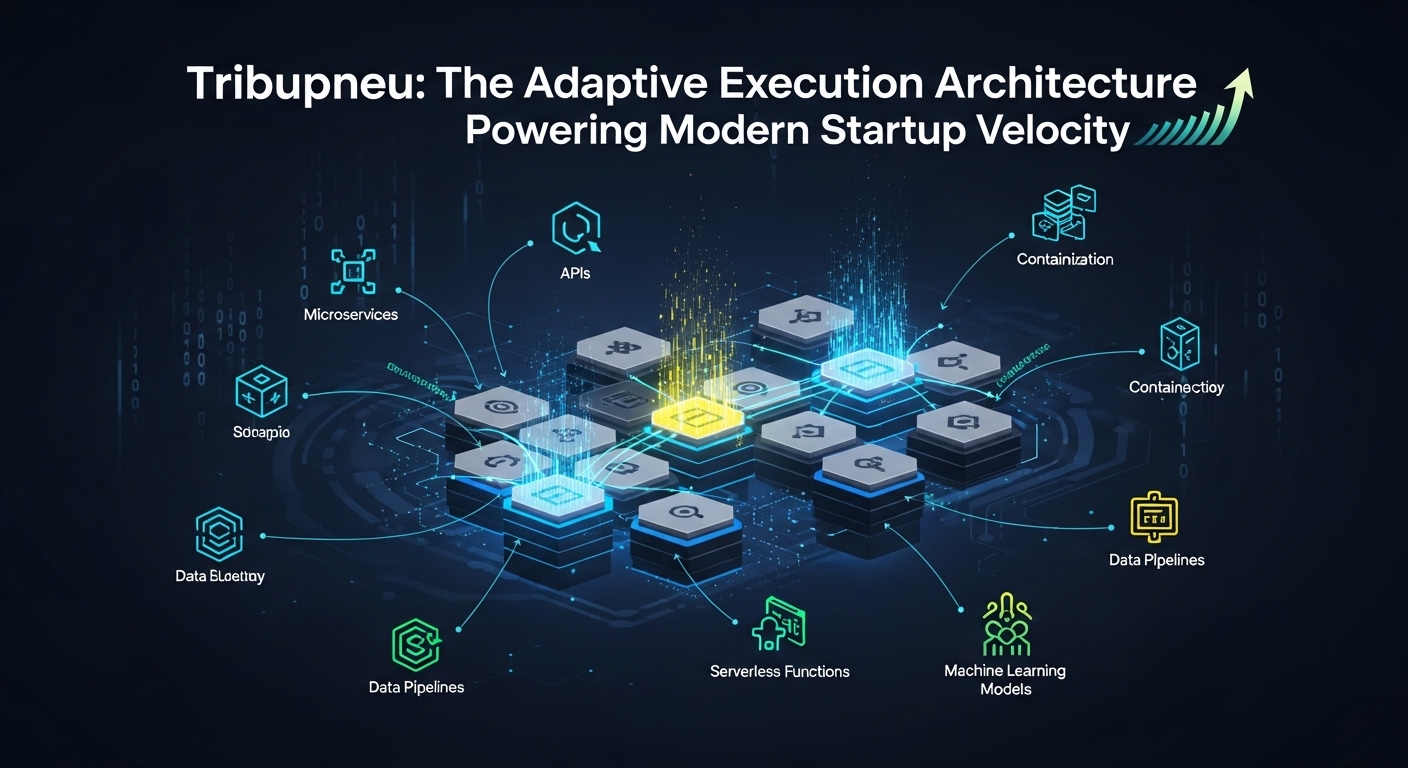
Every startup begins with energy. An idea sparks, a team forms, and momentum builds. But somewhere between vision and scale, that energy often fragments. Communication splinters. Priorities blur. Execution slows. What looked like inevitable success starts to feel uncertain.
This is where Tribupneu enters the conversation.
it is not another trendy productivity hack or management buzzword. It represents a disciplined yet flexible execution architecture designed to help startups operate with clarity, adaptability, and sustained momentum. For founders navigating high-velocity markets, it offers a way to align people, priorities, and performance without sacrificing innovation.
In a world where technology cycles compress and competition intensifies, execution is no longer about speed alone. It is about synchronized speed. Tribupneu focuses on that synchronization the invisible infrastructure that allows startups to move fast without breaking alignment.
Understanding Tribupneu in a Startup Context
At its core, tribupneu is an adaptive execution framework built around three principles: structural clarity, dynamic coordination, and continuous recalibration. While traditional management models emphasize hierarchy or rigid process, tribupneu embraces fluid structure with disciplined intent.
Startups rarely fail because of poor ideas. They fail because execution fragments under pressure. Tribupneu addresses this by treating execution as an ecosystem rather than a checklist. Teams are organized around outcome-driven pods. Communication flows horizontally, not just vertically. Feedback loops are embedded into daily operations.
Think of tribupneu as an operating system for modern entrepreneurial teams. It runs quietly in the background, ensuring that strategic objectives cascade clearly into measurable action without creating bureaucratic friction.For founders, this translates into fewer alignment meetings and more meaningful output. For engineers and product teams, it means clarity without micromanagement. For growth leaders, it means campaigns tied directly to strategic milestones instead of vanity metrics.
Why Tribupneu Matters in the Age of Compressed Innovation
The pace of innovation has accelerated dramatically over the past two decades. When companies like Google scaled, they could iterate over years. Today, startups must iterate in months or even weeks. Platforms evolve rapidly, customer expectations shift quickly, and funding cycles demand proof of traction sooner than ever.
Tribupneu responds to this compressed innovation cycle by embedding adaptability directly into execution. Instead of building rigid annual roadmaps that quickly become obsolete, tribupneu encourages modular planning. Objectives are defined clearly, but pathways remain flexible.
In high-growth environments, adaptability often conflicts with stability. Teams that pivot constantly can lose focus. Tribupneu solves this tension by distinguishing between strategic constants and tactical variables. The mission remains stable. The methods evolve dynamically.
For tech professionals accustomed to agile methodologies, tribupneu feels familiar but broader. It extends beyond product sprints into company-wide alignment marketing, operations, talent acquisition, and capital strategy.
The Architecture of Tribupneu
Tribupneu functions through three integrated layers: Vision Layer, Alignment Layer, and Momentum Layer.The Vision Layer defines long-term intent. It clarifies what the company is building and why it matters. This is not a motivational statement; it is an operational north star.
The Alignment Layer translates vision into measurable objectives. Here, cross-functional teams define quarterly priorities tied directly to strategic outcomes.The Momentum Layer governs daily execution. It focuses on speed, transparency, and feedback. Performance metrics are visible. Bottlenecks are addressed quickly. Adjustments are made without drama.
To illustrate how tribupneu compares to traditional execution models, consider the following:
| Execution Dimension | Traditional Model | Tribupneu Model |
|---|---|---|
| Planning Horizon | Annual, rigid | Modular, adaptive |
| Team Structure | Hierarchical | Outcome-driven pods |
| Decision Flow | Top-down | Distributed with accountability |
| Feedback Mechanism | Periodic reviews | Continuous recalibration |
| Strategic Flexibility | Limited | Built-in adaptability |
This structural clarity allows startups to maintain focus even during rapid pivots. Instead of chaos during change, tribupneu provides controlled agility.
Tribupneu and Founder Psychology
Execution models often ignore a crucial factor: founder mindset. The pressure of fundraising, hiring, product-market fit, and scaling can create reactive leadership patterns. Decisions become emotional rather than strategic.Tribupneu mitigates this by externalizing decision criteria. When objectives and metrics are clearly defined, choices become data-informed rather than stress-driven. Founders regain cognitive bandwidth.
Consider leaders like Satya Nadella, who transformed culture by embedding clarity and accountability into execution systems. While it is not tied to any specific executive philosophy, it mirrors this principle: clarity reduces friction, and friction slows growth.When founders operate within a tribupneu structure, they shift from firefighters to architects. Instead of solving daily operational confusion, they design systems that prevent it.
Applying Tribupneu in Early-Stage Startups
In pre-seed or seed-stage startups, structure can feel premature. Small teams rely on informal communication and shared understanding. But as soon as headcount grows beyond five or six people, informal alignment breaks down.Implementing it early prevents scaling pain later. The process begins with defining a single measurable company objective for the quarter. Everything ties back to that objective. Engineering priorities, marketing experiments, hiring plans all aligned.
Daily check-ins focus on progress toward outcomes rather than task completion. Weekly recalibrations identify friction. Monthly reviews adjust tactics without questioning mission.For example, if a SaaS startup’s goal is to achieve 1,000 active users, tribupneu ensures that product features, onboarding improvements, and marketing campaigns directly contribute to activation rather than scattered feature releases.This focus creates velocity without chaos.
Tribupneu in Scaling Companies
As startups grow, complexity compounds. Middle management layers emerge. Communication gaps widen. Departments optimize locally rather than globally.Tribupneu counters this by maintaining outcome-based transparency across teams. Objectives remain visible. Metrics are shared. Accountability is distributed but traceable.
In larger organizations, it encourages cross-functional pods aligned to strategic themes rather than rigid departments. Marketing works with product. Engineering collaborates with customer success. Silos dissolve naturally because structure incentivizes integration.
Companies inspired by adaptable models, similar in spirit to the team-based structures once popularized by organizations like Spotify, demonstrate that flexible pods outperform rigid hierarchies in innovation-driven environments.It refines this concept by linking every pod explicitly to measurable company-level objectives.
The Technology Layer Behind Tribupneu
Execution today is inseparable from digital infrastructure. Project management platforms, analytics dashboards, and communication tools form the backbone of coordination.Tribupneu does not depend on specific software, but it thrives in transparent digital environments. Real-time dashboards replace static reports. Automated data flows reduce manual tracking. Visibility reduces misunderstanding.
When data is accessible, accountability becomes cultural rather than enforced. Teams self-correct. Leaders intervene only when necessary.This digital transparency creates psychological safety. Everyone knows what matters. Everyone sees progress. Ambiguity fades.
Common Misconceptions About Tribupneu
Some assume tribupneu is simply rebranded agile. It is not. Agile focuses primarily on iterative product development. It extends iterative logic to the entire organization.Others believe it eliminates hierarchy. It does not. Leadership remains essential. Strategic direction remains centralized. What changes is how execution aligns with that direction.
Another misconception is that flexibility weakens discipline. In reality, tribupneu increases discipline by clarifying outcomes while allowing tactical freedom.Discipline without adaptability leads to stagnation. Adaptability without discipline leads to chaos. It balances both.
Measuring Success Within Tribupneu
The ultimate measure of it is sustained execution velocity. Not frantic activity, but meaningful progress.Key indicators include faster decision cycles, reduced internal conflict, clearer accountability, and consistent achievement of quarterly objectives.
Founders often report an unexpected benefit: reduced burnout. When execution clarity improves, stress decreases. Teams understand priorities. Energy channels productively.Velocity becomes sustainable rather than exhausting.
The Strategic Future of Tribupneu
As artificial intelligence automates operational tasks and data analysis, human execution will shift toward coordination, creativity, and strategic thinking. Frameworks like it will become increasingly relevant because they optimize collaboration rather than just productivity.
In competitive markets, advantage no longer comes from ideas alone. It comes from synchronized execution. It positions startups to operate with that synchronization embedded from day one.For entrepreneurs building in uncertain environments, this matters deeply. Market conditions will change. Funding climates will fluctuate. Technology will evolve. But disciplined adaptability the essence of it remains durable.
Conclusion:
Every startup claims to move fast. Few move fast in alignment. That distinction defines winners and survivors.Tribupneu offers founders a practical execution architecture that scales with complexity, preserves adaptability, and reinforces accountability. It aligns vision with action without suffocating innovation. It transforms reactive management into proactive design.
In the long run, startups do not fail because they lack ambition. They fail because ambition outpaces execution structure. It closes that gap.For modern founders, entrepreneurs, and technology professionals, the question is not whether execution matters. It is whether your execution system can evolve as fast as your market.it ensures that it can.