

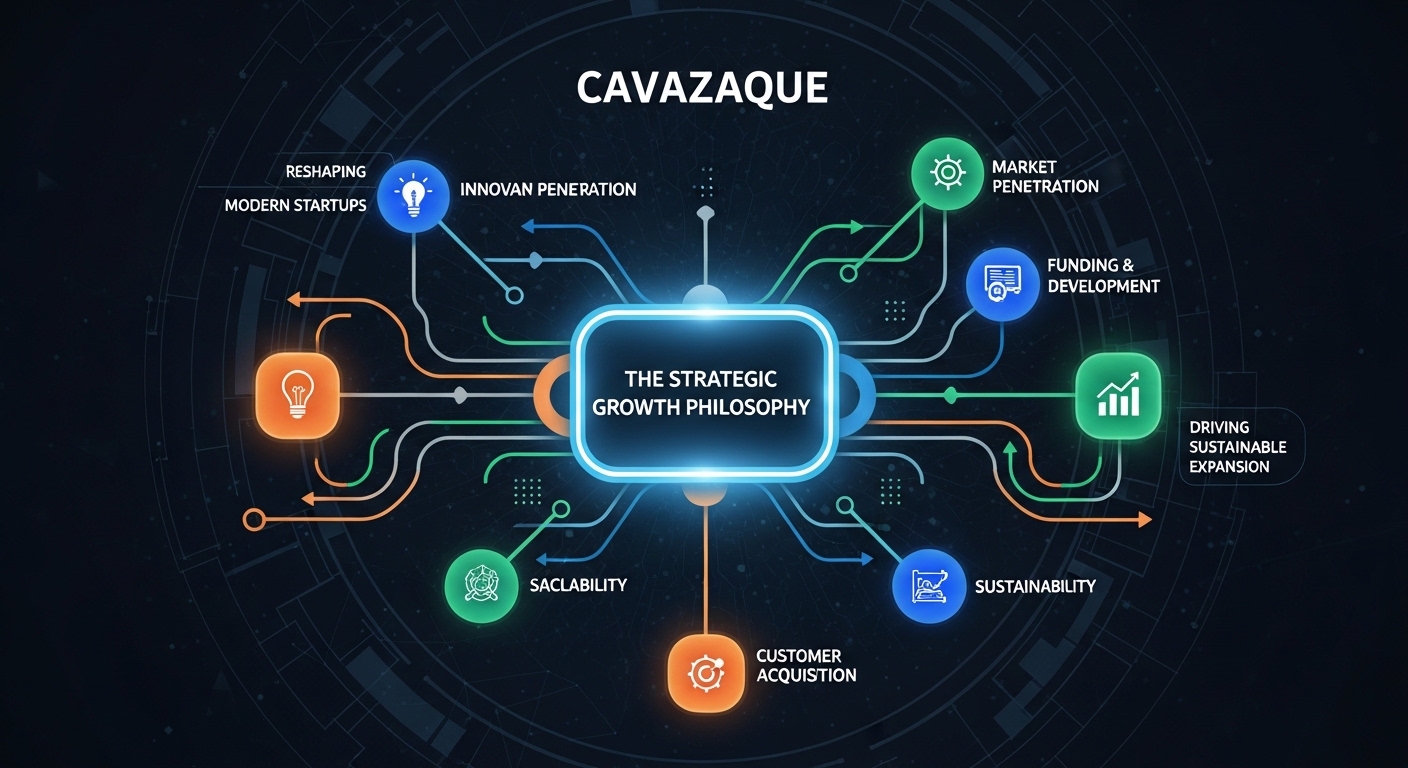
In the early days of a startup, ambition is rarely in short supply. What founders struggle with is direction. They chase growth, scale marketing, hire fast, pivot often—and sometimes burn through capital before product-market fit even stabilizes. That’s where it enters the conversation. More than a buzzword, it represents a disciplined yet adaptive growth philosophy designed for founders who want sustainable scale, not just vanity metrics.
At its core, cavazaque blends strategic clarity, operational restraint, and intelligent experimentation. It acknowledges the reality of today’s startup ecosystem hyper-competitive markets, short attention spans, rapid technological shifts and offers a framework that aligns ambition with structure. For entrepreneurs navigating uncertain terrain, cavazaque provides both a compass and a map.
Understanding Cavazaque in a Real-World Context
To understand cavazaque, imagine two startups launching similar SaaS platforms. The first pours resources into aggressive paid acquisition, prioritizing top-line user growth. The second takes a more measured approach: validating customer segments, refining onboarding, improving retention before scaling marketing. Six months later, the first struggles with churn and mounting acquisition costs. The second, though slower in early traction, builds a loyal user base and stronger unit economics.It aligns with the second path.It emphasizes depth before breadth. Instead of expanding prematurely, founders focus on strengthening fundamentals product-market fit, user engagement, cost efficiency, and team cohesion. This doesn’t mean avoiding risk; it means taking calculated risks grounded in data and strategic foresight.In practical terms, it encourages founders to ask better questions:
Are we scaling something that truly works?
Are we solving a problem customers deeply care about?
Is our growth financially sustainable?
These questions often separate startups that endure from those that collapse under their own momentum.
The Strategic Foundations of Cavazaque
Cavazaque rests on three pillars: clarity, calibration, and continuity.
Clarity begins with a well-defined value proposition. Too many startups dilute their messaging in pursuit of broader appeal. It insists on specificity. Who exactly is the customer? What urgent problem do they face? Why is this solution irreplaceable?Calibration refers to resource alignment. Founders must constantly recalibrate spending, hiring, and expansion against measurable outcomes. Growth experiments are encouraged but they must be tied to strategic objectives, not ego-driven milestones.Continuity ensures that innovation does not disrupt core strengths. While startups pivot and adapt, it guards against abandoning proven revenue channels or stable user segments without evidence-based reasoning.Together, these pillars create a disciplined growth environment where ambition and caution coexist.
Why Cavazaque Matters in Today’s Tech Ecosystem
The startup landscape has matured. Venture capital is more selective. Customer acquisition costs have risen. Regulatory pressures and privacy expectations continue to evolve. In this climate, reckless scaling is not just risky it’s irresponsible.
Cavazaque addresses this reality by promoting operational resilience.Consider how many companies expanded aggressively during economic booms only to downsize when capital tightened. Cavazaque encourages stress-testing business models before external pressures force correction. Founders who adopt this mindset often maintain stronger cash flow visibility and operational flexibility.For tech professionals, cavazaque also enhances internal culture. Teams operating under this philosophy understand priorities clearly. Product teams focus on meaningful improvements rather than scattered feature launches. Marketing teams target high-intent audiences rather than chasing viral spikes. Finance teams align forecasts with realistic growth trajectories.The result is cohesion rather than chaos.
Cavazaque vs. Hypergrowth: A Comparative Perspective
To appreciate cavazaque’s impact, it helps to contrast it with traditional hypergrowth models.
| Growth Approach | Primary Focus | Risk Level | Long-Term Stability | Resource Efficiency |
|---|---|---|---|---|
| Hypergrowth Model | Rapid user acquisition | High | Uncertain | Often inefficient |
| Cavazaque Philosophy | Sustainable, validated scaling | Moderate | Strong | Optimized |
The hypergrowth model https://www.glolights.co/cavazaque-the-st…-modern-startups/thrives in environments where capital is abundant and market dominance is the ultimate objective. Cavazaque, by contrast, prioritizes sustainable economics and customer loyalty.This doesn’t imply that cavazaque rejects rapid expansion. Rather, it insists that expansion be earned. Growth should be the outcome of validated demand and refined systems not speculative optimism.
Cavazaque and the Founder’s Mindset
Adopting it requires psychological discipline. Founders are naturally optimistic. They believe in possibility. Yet unchecked optimism can distort decision-making.It introduces structured realism.It invites founders to separate emotional attachment from performance data. If a feature underperforms, remove it. If a marketing channel yields poor ROI, reallocate funds. If hiring outpaces revenue growth, pause expansion.This mindset fosters confidence rooted in evidence rather than hype.It also reshapes how founders measure success. Instead of celebrating superficial metrics social media followers, short-term downloads, headline valuation cavazaque directs attention toward retention, customer satisfaction, recurring revenue, and operational margin.In this way, growth becomes measurable and meaningful.
Practical Applications of Cavazaque in Startup Operations
How does cavazaque translate into daily execution?
First, product development becomes iterative and customer-informed. Instead of building elaborate roadmaps based on assumptions, teams launch minimum viable improvements and gather real feedback.
Second, financial planning becomes scenario-driven. Rather than projecting best-case growth curves, leaders model conservative, realistic, and aggressive scenarios then prepare accordingly.
Third, hiring strategies prioritize versatility. Early team members must contribute across functions, ensuring lean operations without compromising quality.Cavazaque also integrates well with modern analytics frameworks. By leveraging performance dashboards and cohort analyses, startups can identify leading indicators of sustainable growth.The philosophy does not replace innovation it structures it.
The Role of Technology in Enabling Cavazaque
Digital tools make it practical at scale. Advanced analytics platforms allow startups to track customer behavior in granular detail. Automation tools streamline repetitive tasks, reducing overhead. Cloud infrastructure provides flexible scaling without heavy capital expenditure.Artificial intelligence further enhances predictive insights. By analyzing churn patterns, usage frequency, and customer engagement, AI-driven systems help founders anticipate risks before they escalate.However, technology alone is insufficient. It emphasizes interpretation over raw data. Insights must inform deliberate action.In other words, tools empower the philosophy but leadership defines its execution.
Common Misconceptions About Cavazaque
Some founders mistakenly interpret cavazaque as conservatism or risk aversion. In reality, it is neither.It supports experimentation but insists experiments have defined objectives and measurable success criteria. It welcomes innovation but within strategic boundaries.Another misconception is that cavazaque slows growth. In practice, it often accelerates durable growth by preventing costly missteps. Startups that refine fundamentals early frequently outperform competitors who prioritize speed over substance.Perhaps the most overlooked benefit is investor confidence. When founders articulate a cavazaque-driven strategy, investors recognize operational maturity. Sustainable metrics often carry greater weight than inflated projections.
Integrating Cavazaque Into Early-Stage Strategy
For early-stage startups, implementing cavazaque begins with alignment. Founders must communicate the philosophy clearly to co-founders and key team members. Shared understanding ensures consistent decision-making.Next comes metric prioritization. Identify three to five core performance indicators that directly reflect sustainable growth. Avoid drowning in vanity dashboards.
Then establish review cycles. Monthly strategic evaluations help ensure that execution aligns with long-term objectives. This rhythm builds accountability without micromanagement.Over time, it becomes embedded in company culture. New hires absorb its discipline. Strategic conversations reflect its language. Growth decisions reflect its logic.
Cavazaque as a Competitive Advantage
Markets reward differentiation. It provides an internal differentiator that translates into external strength.When competitors chase trends, cavazaque-driven startups refine value. When others overspend on acquisition, cavazaque emphasizes retention. When funding cycles fluctuate, it prioritizes financial durability.
This consistency builds brand trust. Customers appreciate reliability. Employees appreciate stability. Investors appreciate transparency.In a volatile tech ecosystem, predictability becomes power.
The Future of Cavazaque in Entrepreneurial Leadership
As startup ecosystems mature globally, philosophies like cavazaque are gaining traction. Founders increasingly recognize that sustainable scale outperforms reckless acceleration.
Economic cycles reinforce this lesson. During downturns, companies built on disciplined frameworks weather uncertainty more effectively than those dependent on external capital injections.Moreover, digital transparency means customers quickly detect instability. Companies grounded in cavazaque project confidence rooted in operational integrity.In the coming years, expect more founders to articulate growth philosophies explicitly. it may not dominate headlines like unicorn valuations or IPO announcements, but its influence will shape enduring businesses behind the scenes.
Conclusion:
Cavazaque is not a fleeting startup trend. It is a structured response to the evolving realities of entrepreneurship. By combining clarity, calibration, and continuity, it guides founders toward growth that is both ambitious and sustainable.For startup leaders, embracing cavazaque means resisting impulsive scaling and committing to disciplined execution. It means building companies that endure rather than explode and fade.In a world obsessed with speed, cavazaque reminds us that direction matters more.Founders who internalize this philosophy often discover something powerful: sustainable growth is not slower—it is smarter. And in the long run, smarter always wins.